329. Your Brand is Your Promise: The 4 C’s for Better Communication
“A brand is a promise, and a great brand is a promise well kept.”


 Goodpods
  RSS Feed
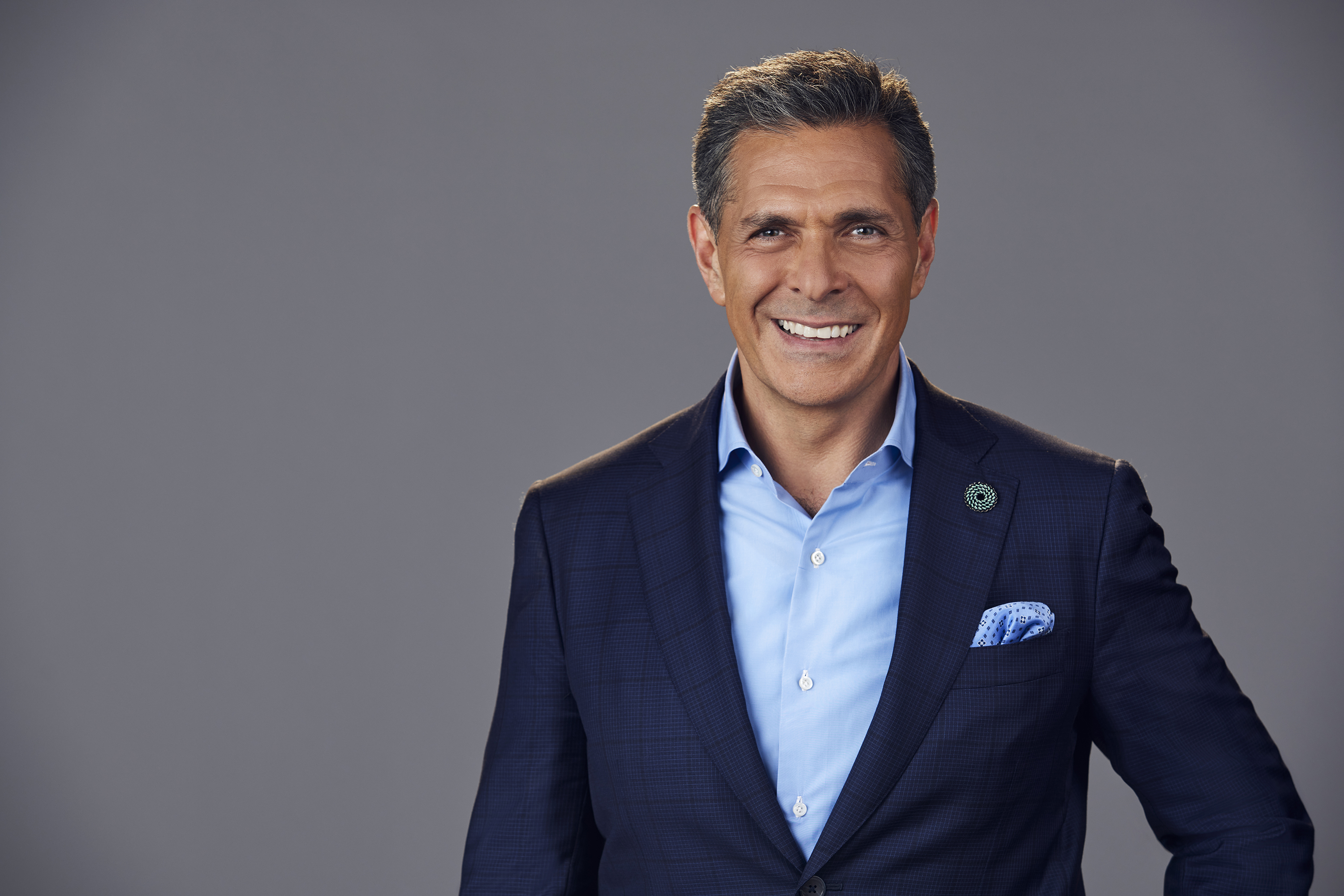
 What does it take to build something people believe in? For Daniel Lubetzky, social entrepreneur and KIND Snacks founder, it starts with curiosity, compassion, creativity, and courage, along with a willingness to listen, learn, and stay true to what you stand for. In this episode of Think Fast, Talk Smart, Lubetzky joins Matt Abrahams to share lessons from building businesses, brands, and bridges between people. He explains why authenticity matters more than appearing to have all the answers, how great brands keep their promises, and what entrepreneurs can learn from listening, practicing, and knowing when to adapt without losing sight of their values.
Takeaways:
- Authenticity builds trust. You don’t need to have every answer or appear perfectly polished. Being willing to admit what you don’t know, listen, and learn can make others more willing to believe what you do say.
- Strong brands know what they promise. Consistency around your values and value proposition helps people know what to expect from you, while thoughtful feedback can help you adapt without losing what you stand for.
Activity:
- Practice the pause. In your next conversation, resist the urge to jump in when the other person finishes speaking. Leave a brief pause, then respond to what you actually heard rather than what you expected them to say.
Printable Expanded Takeaways & Activities
To listen to the extended Deep Thinks version of this episode, please visit FasterSmarter.io/premium.
Episode Reference Links:
- Daniel Lubetzky
- Daniel’s Book: Do the KIND Thing
- Daniel’s Podcast: Build or Break
- Ep.153 Listen Up, Leaders: A Record-Setting Coach's Guide to Communication
Connect:
- Premium Signup >>>> Think Fast Talk Smart Premium
- Email Questions & Feedback >>> hello@fastersmarter.io
- Episode Transcripts >>> Think Fast Talk Smart Website
- Newsletter Signup + English Language Learning >>> FasterSmarter.io
- Think Fast Talk Smart >>> LinkedIn, Instagram, YouTube
- Matt Abrahams >>> LinkedIn
00:00 - Introduction
01:01 - Builders vs. Destroyers
02:41 - The Four Cs of a Builder’s Mindset
04:28 - Listening, Pausing, and Authenticity
07:22 - What Entrepreneurs Get Wrong
08:51 - Betting on the Entrepreneur
10:20 - Building a Brand That Keeps Its Promise
12:42 - The Three Cs of the Creative Process
18:37 - The Final Three Questions
23:12 - Conclusion
[00:00:00] Matt Abrahams: All communication is about building connections and relationships. My name's Matt Abrahams, and I teach strategic communication at Stanford Graduate School of Business. Welcome to Think Fast, Talk Smart, the podcast. Today I am excited to speak with Daniel Lubetzky. He's a pioneering social entrepreneur and the founder of KIND Snacks. He leverages his unique background in Stanford Law education to bridge deep societal divides, most recently launching the Builders Movement to empower citizens to overcome toxic polarization. Daniel is a best-selling author of Do the KIND Thing, and a full-time investor on TV's Shark Tank. He's launching his own podcast called Build or Break. Well, welcome, Daniel. I am a lover of your KIND bars. My pantry is full of them, and I'm looking forward to our conversation today. Thanks for being here.
[00:00:56] Daniel Lubetzky: I'm so happy to be here, Matt. Thanks for having me.
[00:00:58] Matt Abrahams: Excellent. Shall we get started?
[00:01:00] Daniel Lubetzky: Absolutely.
[00:01:01] Matt Abrahams: You distinguish between builders and destroyers. Can you define these for us? And, and what role does communication play in that?
[00:01:10] Daniel Lubetzky: You know, my father was a Holocaust survivor, so my entire life, or since I remember, I've been trying to build bridges to prevent what happened to him from happening again to other people. And what I've learned is that every one of us has a choice every single morning, every single day, in how we look at other people and how we act. And we can either deny the humanity of others and then proceed to try to divide, destroy, demolish, diminish, or you can choose to wake up in the morning and think, "How can I make this a better world? How can I build together? How can I try to elevate humanity? How can I unite and solve problems together?" And then you're a builder.
[00:01:52] And it's a choice that all of us have every day in how we live our lives, whether we're gonna try to solve problems together or tear each other apart. And it seems very logical because when I just shared this message, probably ninety-nine percent of your listeners agree, but it's very easy for us to fall prey to social media algorithms, to divisive media, to divisive politicians, to foreign influences, to divisive rhetoric, to divisive curricula that frames things as victim versus oppressor, and that makes us think that it's us versus them. And the natural proclivity over the last many years has been to think that we are in our own tribe rather than all of us being human. What does communication play into? It is the most important framework for us to think and communicate our ideas. So without it, we have nothing.
[00:02:41] Matt Abrahams: I appreciate that distinction and that it is a choice, and communication forms, uh, the foundation, as you said, to help us to break down those, those walls and build those bridges. You've defined four C's that compromise a builder's mindset. Can you share what these are, and how can we actively cultivate them in our daily interactions and in the way we present ourselves in the world?
[00:03:07] Daniel Lubetzky: Yeah. As you know, man, I founded KIND, the healthy snack company that you, you like. But I've also built a lot of civic movements in the Middle East between Arabs and Israelis, Palestinians and Israelis working together, in the United States, the Builders Movement, which is what this spin is about, to try to join forces against extremism and towards solving problems. What I started realizing is the same toolkit and the same mindset that helped me build KIND is the same toolkit that helped me build movements and community. And it's the four C's are curiosity, compassion, creativity, and courage. Curiosity to not assume that you have all the answers, to search truth, to want to always be proven right or wrong so that you can always learn and grow and, and develop the best ideas for how to build the next snack or the best solution for homelessness.
[00:03:59] So curiosity is about the search for truth, the search for commonality, which also leads us to compassion, to the ability to put yourself in other people's shoes, not just because it's the KIND thing to do, but because then you can understand where the other person's coming, and then you can navigate differences and come up with solutions. Creativity to think outside the box, and the courage to take leadership roles and to do things that might sometimes be uncomfortable, to say what needs to be said in a constructive way to try to solve problems together.
[00:04:28] Matt Abrahams: We can be so busy and get so absorbed that giving ourselves that little bit of grace and time really can make a difference. I appreciate that. In your work you have done in bridge-building, in building businesses, what communication tools do you recommend or have you found can really help keep the conversation moving forward, especially when you see people slipping more into what you call that destroyer mindset that's dividing more than bringing together?
[00:04:57] Daniel Lubetzky: Probably the most important is listening, is the ability for you to, which is very hard for all of us and particularly for me to do. I always want to share, and I like to hear my voice, and I have ideas, and I think I know where people are going. And you, as you know, I'm launching a podcast called Build or Break, interviewing some of the most extraordinary people, from Matthew McConaughey to Mark Cuban, from Kendra Scott to Lucia Harish, across a spectrum of business, artistry, geographies, demographies. And definitely, definitely the hardest skill for me has been to learn to listen, and I, I'm enjoying Build or Break because it's so challenging for me to not be the interviewee where I can go everywhere else, and you're the one that has to keep the train running. So listening, I think, is an incredibly powerful skill.
[00:05:46] And even the use of pauses when you're speaking, that negative space very often creates a lot of positivity. So I think the use of pauses is very important. I think more broadly in terms of the communications tools that I would recommend to others is first and foremost, as much as possible, practice, practice, practice. In Build or Break, one of the things that has become very clear to me is that all of the most extraordinary people tried a bunch of things that didn't work, but they got back on the horse, they dusted it off, and then they tried and tried again. So developing the skills and the tools for you to have the courage to get back on the horse, keep trying, because the more that you practice, the more reps that you put into it, the better you'll get at it.
[00:06:29] I think there's a lot to be said for learning how to articulate, how to be transparent, how to construct sentences, but above all, to not lose your authenticity. To be yourself always. Because I find that you can be very polished, but if you lose the essence of who you are, people are gonna tell. So I think the single most important thing is for you to be authentic, for you to be yourself. And then within that, be present and be comfortable understanding that you're there for a reason, that people wanna hear you. Very often we get nervous, and we feel that we're not supposed to be there, and so we speak very fast, and then people can't understand you. So slowing yourself down, being present, and connecting with people, listening to the audience and connecting with them to understand what's the right beat for your conversation.
[00:07:22] Matt Abrahams: Lots of rich responses and ideas there. I really resonated with the idea that pausing leads to positivity. I like the play on words, and I, and I like that. Taking the, the beat to let the other person finish, and the ability to listen is hard. I would like to get your thoughts on business and building business. Obviously, you have lots of experience with that. You have watched hundreds of pitches on Shark Tank. What is the most common communication mistake entrepreneurs make when they're trying to influence people or move them towards their position?
[00:07:58] Daniel Lubetzky: The feeling that you need to be right, and you need to demonstrate mastery at all times no matter what, can really be your greatest undoing. If you do not know something, and you can say, "That's a great question. I actually don't have the answer to that," all of a sudden I like that person, and I lean in. I'm like, "Okay, when this person speaks, I'm gonna trust what they say." By the way, they should know their basic stuff.
[00:08:20] But as a general rule, it's okay to admit when somebody shares something you haven't thought about or where you don't have a perfect answer to it, and you acknowledge it. Because it goes back to what you were talking about earlier about the importance of introspection and demonstrating self-reflection. And so you, if you're able to show the ability to, as you go along, learn things that you need to learn, I think it's a very important gift. And the opposite, total certitude at all times, for me, doesn't excite me.
[00:08:51] Matt Abrahams: So being human and, and admitting what you know and what you don't know, and putting on a false bravado or false knowledge will get you in trouble. I have often heard, and I'd be curious to get your opinion, that, that people in your position, investors, uh, you know, supporters of, of businesses, the idea is important, but the person behind the idea is even more important. Do you, do you believe that to be true?
[00:09:13] Daniel Lubetzky: I think for me and for almost all investors, that's the case. Like, obviously, there's three things that fundamentally need to be there: the person, the product, and the market. Like, there needs to be a fit. There's, somebody needs to be looking for it. The product or service needs to be better than the others, and the person or entrepreneur needs to be there. Ideally, you have all three. But if you don't have the entrepreneur, you don't have anything, in my opinion. Whereas if you have the entrepreneur and the other two are weak, you can work towards the others. So I heard Warren Buffett talk about this many years ago. It's not unique. Always you'd bet on an entrepreneur over the product, because the entrepreneur can then adjust the, to make things fit. It's the most essential thing.
[00:09:58] Matt Abrahams: The reason I ask the question is I think a lot of entrepreneurs, I do a lot of coaching of people who pitch, and a lot of them really fixate on the product or the service, the market, which are very important, as you said, but they don't pay any attention to how they themselves are, are selling themselves and how they're coming across. And what I'm hearing you say is it's important to be authentic and let people know who you are and where you stand.
[00:10:20] I have a question about, uh, building businesses and audiences. Uh, you've built brands yourself and, and you certainly coach others. When you're building a brand's audience from the ground up, how do you strike that balance and manage that tension between staying focused on your core mission, but also being flexible enough to respond to what the market demands? That, that seems to be a, a specific skill.
[00:10:46] Daniel Lubetzky: Almost all amazing ventures did not start with a product or service that they became successful at. Almost every company, almost every idea, you start something and every one of the most inspiring entrepreneurial people you've met, they start, they fall from the horse, they get back on, and then they take a different journey, but then eventually they figure it out because they don't give up. In terms of building a brand, the most important thing is to understand that a brand is a promise, and a great brand is a promise well kept. What does that mean? It means that a brand is a shortcut for what can you expect from me? What is my value proposition?
[00:11:30] When you buy my KIND bar, this is what you know you'll get. When you buy this service, this is what you'll know you'll get. And so if you keep trying to reinvent your brand to be everything to everybody, you'll end up being nothing to nobody. You need to be consistent. And so what you need to do is set a set of guardrails for what my brand stands for and what it will not do, and be true to it. You need to get feedback from the marketplace, and it's a very tricky dance because if you say, "My brand is this, I shall not adjust from it," and the market is telling you, "Pivot, pivot, adjust, adjust," and you're not willing to listen, then you might also fail.
[00:12:10] But on the other side, if every person that talks to you, you're trying to pivot and you're trying to change yourself every single day, you're also gonna become nothing. So you need to find a way to stay true to your values. And then if at some point the feedback is significant enough that justifies calibration, make sure that it's not a daily calibration, but a really, really rare thing that can help get you into the right direction. But it, it has to be, there has to be a lot of reflection into when do you deviate from the guardrails that you set for yourself?
[00:12:42] Matt Abrahams: I really like this idea of brand as a promise. It's a shortcut to what it is that you believe in. That's really important. And that tension of being committed and dedicated to your values, the guardrails, as you said, but at the same time being open and flexible to input and making those wise decisions based on that, really important, uh, to help navigate as things change, and they will. Daniel, I know you have a very specific process that you use to help people think through their entrepreneurial ideas or products or services. Can you share that with us, please?
[00:13:16] Daniel Lubetzky: I love my C's. I have the builder's mindset four C's, but I also have three C's for the creative process of an entrepreneur, and this is a very, very important set of C's. Whatever you're trying to do, whether it's to come up with a product or an idea or a creative campaign, you have to start with the creative process, then go into the critical process, and then into the crusader. So during the creative process, it's your brainstorming phase, and the rule is that there are no rules. You have to force yourself to come up with idea after idea after idea and push yourself. And if you're in a brainstorming room with others or with yourself in your mind, you have to say, "Nothing's off. Come up. Start thinking. Let's throw an idea. Okay, let's do this. Let's throw this product. No, what if it had this?
[00:14:12] What if it had giant tears? What if it was a camel walking the streets of Manhattan?" Almost by definition, think so much outside the box that your idea is ridiculous. Nobody's thought about this before. That's where you can defeat AI, because AI is a conglomeration of prior ideas, but you need to think about something that nobody's ever thought before for you to really, really create value. Then after you've done your creative process, you take a break, 'cause during the creative process, you cannot introduce any filters that will take out any of that creativity. You write down everything, the stupidest idea. You write down everything. That's the creative process. You take a break, you come back, and you introduce the critic, the consummate critic.
[00:14:54] And so the consummate critic, you apply a bunch of filters. Has somebody done it before? Do I have the capability to do it? Does it make sense? Is it gonna fit with what I'm meant to do? Do I believe in it? What's the cost-benefit analysis? What's the input-output analysis? Does it, like, you ask all of the questions about whether it makes sense. Can you execute it? Is it fun? Does it fit with your brand? You introduce all the filters that you want, and you go through all of the list, and you apply the filters, and then you narrow it down. For example, when I was launching Moshe Pupik and Ali Mishmuken’s, somebody, one of my team members said, "Let's have a camel walking through the streets of Manhattan." And we're like, "Yeah, whatever." Wrote it down. And they're like, "That would be so funny."
[00:15:37] And we ultimately ended up having a camel walking through the streets of Manhattan, and it was hilarious, and it got so much media attention 'cause nobody had done it before. And so sometimes the silliest idea actually is executable. So you go from the creative process to the consummate critic, and then after the consummate critic, you go to the crusader. So particularly if you, it's, if it's not just a stunt, but a product or a service or a venture that you wanna start and you're brainstorming on what you're gonna do, you really need to go through the critical phase enough that you're doing a lot of competitive intelligence and you're asking a lot of questions to really understand that you've got what it takes, and this is what gives you purpose, and this is what you really wanna do.
[00:16:20] But if you've gone through that intellectual trial by fire and you're still convinced, at that point you switch and you go from the consummate critic to the crusader. That means you are gonna get it done and you're not gonna give up. You're not gonna give up easily. You're not gonna give up ever. You're gonna get through it because any entrepreneur, any venture person that's trying to do, build a social enterprise, a civic organization, a business, it is not easy. It's gonna be harder than you ever imagined. And so you need to have the grit, the gumption, the staying power to overcome any of those challenges. So that's where once you've gone through those difficult questions to yourself and you've convinced yourself that it's worth doing, you then click the switch and you're like, "All right. Now I need to believe in myself and get it done and, and not be easily derailed."
[00:17:15] Matt Abrahams: The three C's of creativity, critic, and crusader really allow us to move and get the momentum we need to be successful, and it seems to me that there are very specific gates that you go through and then switch, so you're not traversing back and forth. And I like that point you said that when you go from creativity to critic, you actually need to take a break. You need to actually switch those gears.
[00:17:42] Let's take a quick break for a word from our sponsor, Strawberry.me. The real value of coaching is what it helps you see and what it helps you do differently. I have been coached and I have coached others, and for me, the value is clarity, seeing what you're doing well, where you're getting in your own way, and what you can do differently. And if you're watching this, I'm guessing you're someone who wants to keep improving. That might mean communicating with more confidence, becoming a stronger leader, or getting clearer about your next career move. Strawberry.me is like therapy for your career. They match you with a coach who fits your goals and gives you practical, personalized guidance you can actually use. It's all designed to make coaching more financially accessible, and because it's online, you can use it from anywhere in the world. Visit strawberry.me/smart to get 50% off of your session, and make sure you tell them Matt sent you.
[00:18:37] Well, Daniel, this has been great. Before we end, as you well know, I like to ask three questions. One I make up just for you, and the rest I've been asking as long as the show's been around. Are you up for this?
[00:18:47] Daniel Lubetzky: Absolutely.
[00:18:48] Matt Abrahams: Excellent. Um, I found so many things about your history fascinating. Uh, you're the son of a Holocaust survivor. You have working knowledge of over 40 languages. That's amazing. But perhaps most interesting to me is you're a lifelong magician. Uh, early in my childhood, I was fascinated by magic, took classes, put on shows, but you've been doing this your whole life. How has your practice of magic influenced your understanding of audiences, engagement, storytelling, and, and even communication?
[00:19:19] Daniel Lubetzky: 100%. A lot of what I love the most is goes back to my dad because he taught me magic. You know, he didn't have a childhood because he went through the war and he was in a concentration camp, and he was then liberated by American soldiers. When he started, growing up back when he immigrated to Mexico, he discovered magic, and then he taught me some of it. And for me, I still today think about him when I do it. Without any doubt, magic is a very powerful tool for understanding people because a, a lot of magic is about psychology and for example, the art of misdirection.
[00:19:54] I have here the Builder's logo, and I'm gonna show you how I grab it, and it disappears, but it was right here all along. And the way it works is I am convinced, and where I look, you're gonna look. So I have it right here. I put it here, but I'm looking with my eyes here, and you see me looking, and you see me pointing here. You see this vehicle? It's pointing here. My eyes are pointing here. So you think it's here, but it wasn't here. I, I had kept it here. And where your eyes go, the other person's go. So I've been in board meetings.
[00:20:32] I discovered this when I was having board meetings at KIND, and sometimes I wanted one of my team members to get the attention, but everybody was looking at me. I started looking at my team member, and everybody started looking at my team member. So where your eyes go as a leader, other peoples will follow. And so the way you look has enormous power to empower your team. It's really fascinating. If anybody tries it, it's really, really effective.
[00:20:56] Matt Abrahams: I love how you've connected, uh, magic, attention, uh, words, uh, together to really help people, uh, one, have enjoyment when it's a magic show, but two, to actually learn and be connected to what you're saying. Question number two, who is a communicator that you admire and why?
[00:21:16] Daniel Lubetzky: My father was the person that I admired the most because the way he communicated was by being the single best listener that I ever met. And he was a great coach. Like, he would listen, and the way he would communicate is by helping me communicate with myself. Like, I would ask him for advice, and he would reflect, and then would ask me questions that would help me derive the answers. It's a real, real talent, and it's very hard, and I would love to develop that skill that he has. But I've yet to become a great coach. I'm very good at telling you what to do, but in terms of helping you figure it out on your own, that's next level.
[00:21:55] Matt Abrahams: I really like that I asked you a question about a communicator, and you immediately went to somebody who listens and coaches, which, which is not typically where people go with that question. But, uh, like you, I would argue that the ability to listen and coach is, are essential. Well, final question for you, Daniel. What are the first three ingredients that go into a successful communication recipe?
[00:22:16] Daniel Lubetzky: Self-confidence, practice, and meaning. And I think this one helps the others. But self-confidence, like believe that you're there for a reason and people are there to listen to you. Own the room. Be present. Practice, practice, practice, particularly your communication. Practice makes perfect. And then find something that authentically gives you purpose and meaning, because if you do, you're gonna be able to break through walls.
[00:22:44] Matt Abrahams: So have confidence in yourself and your message, practice to make sure it comes out the way you wish, and to really do something that you're focused on and means a lot to you. Thank you so much for your time and for sharing how we can all be builders of the ideas and the products and services that we have, and for sharing with us a little bit about the impact that magic can have across building bridges and breaking down barriers. I appreciate your time.
[00:23:09] Daniel Lubetzky: Matt, thank you so much. It was a pleasure.
[00:23:12] Matt Abrahams: Thank you for joining us for another episode of Think Fast, Talk Smart, The Podcast. I really enjoyed speaking with Daniel across all of the advice and guidance he gave. Among the ideas he shared that really stood out to me was the idea that your brand is your promise. We really have to reflect on the promise we're making as we look at our personal and company brands. To learn more about leadership and staying true to your principles, please listen to Tara VanDerveer in episode one fifty-three. This episode was produced by Katherine Reed, Ryan Campos, Alex McCarthy, and me, Matt Abrahams. Our music is from Floyd Wonder, with special thanks to the Podium Podcast Company. Please find us on YouTube and wherever you get your podcasts. Be sure to subscribe and rate us. Also follow us on LinkedIn, TikTok, and Instagram.